By lesopack | 04 January 2024 | 0 Комментарии
How Advanced Recycling Techniques are Revolutionizing the HDPE Bottle Packaging Industry
As the world becomes more environmentally conscious and our resources become increasingly depleted, the need for sustainable solutions in the packaging industry has become a top priority. Advanced recycling techniques are emerging as a powerful tool in improving the sustainability of plastic packaging, particularly for HDPE bottles that are commonly used for household and personal care products like sunscreen. In this blog, we’ll explore the potential of advanced recycling technologies for HDPE bottles, the challenges involved, and the solutions that can help the industry achieve greater sustainability.
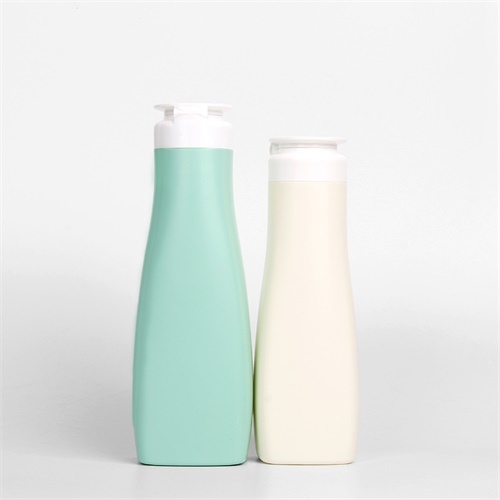
1.The Growing Importance of Advanced Recycling in the Packaging Industry
Traditional recycling processes typically involve downgrading recycled material over time, leading to a gradual loss of quality and eventually rendering it unusable. Advanced recycling, on the other hand, uses chemical processes to break down plastics into their molecular components, which can then be purified and reused to produce new, high-quality plastic products. These techniques are particularly useful for HDPE bottles, which are commonly used in the household and personal care industries.
By using advanced recycling techniques, the HDPE bottle packaging industry can drastically reduce waste and pollution while decreasing its reliance on virgin plastic. In addition, advanced recycling can help create a circular economy, where plastic products can be repeatedly recycled, essentially creating a sustainable plastic industry.
2.How HDPE Bottles Fit into the Advanced Recycling Landscape
While HDPE bottles are easier to recycle than other types of plastic, they still pose challenges due to their additives, colorants, and labeling. The additives and colorants in HDPE bottles can create impurities, while the labeling itself can be difficult to remove and cause contamination. However, advanced recycling technologies are allowing for a more efficient removal of these factors, resulting in a purer and more durable final product.
Moreover, HDPE bottles have unique properties that make them particularly suitable for advanced recycling. For instance, they have a high melting point, which makes them easy to process without losing their structural integrity. Additionally, they’re relatively lightweight, durable, and resistant to chemicals, making them ideal for a wide range of packaging applications.
3.Challenges and Solutions in Recycling HDPE Bottles
One of the primary challenges associated with recycling HDPE bottles is ensuring the purity of the final product. The presence of impurities and contaminants can compromise the structural integrity and overall quality of the recycled material, rendering it unusable. In order to address this challenge, processes like washing and separation are used to purify and isolate HDPE plastic fractions from other materials.
Another challenge is the presence of additives in HDPE bottles that can affect the properties of the recycled plastic. However, researchers are exploring the potential of using chemical recycling techniques like depolymerization to break down the plastic into its base components. This process allows for a more thorough and efficient removal of additives and other impurities, resulting in a purer and more durable final product.
4.The Role of Chemical Recycling in Enhancing HDPE Sustainability
Chemical recycling is a promising solution for enhancing the sustainability of HDPE bottles. This process involves converting the plastic into its raw materials through depolymerization, and purifying it before it’s used to produce new products. This technique can help to overcome some of the challenges associated with traditional recycling methods, such as contamination and loss of quality over time. Moreover, chemical recycling can help create a circular economy by enabling the production of new products from recycled materials.
5.Future Directions: Scaling Advanced Recycling Processes for HDPE
While advanced recycling technologies for HDPE bottles are promising, there are still challenges to be addressed. Scaling these processes to meet the growing demand for sustainable packaging will require significant investment in infrastructure, technology, and research. However, with continued advancements and greater awareness of the need for sustainability in the packaging industry, these challenges can be overcome.
As the world continues to embrace sustainability, the need for advanced recycling techniques like chemical recycling will only increase. For the HDPE bottle packaging industry, these technologies offer a way to reduce waste and pollution while creating a more efficient and sustainable plastic industry. While there are challenges to be addressed, the future of advanced recycling for HDPE bottles is promising, and the potential benefits are clear.
оставьте ответ
Ваш электронный адрес не будет опубликован. Обязательные поля отмечены. *